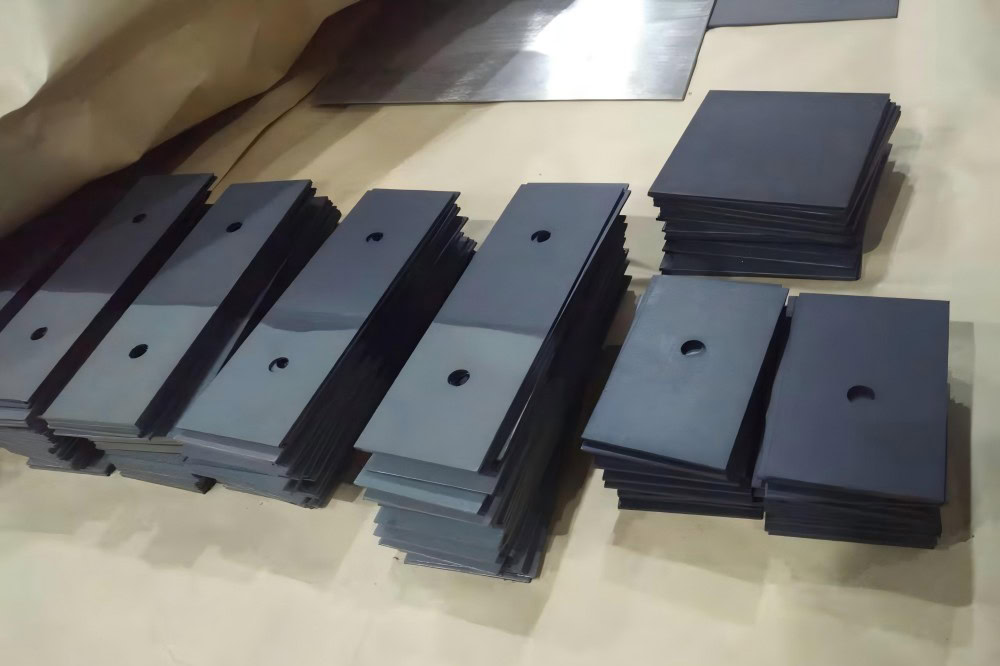
WSTitanium gains popularity in the automotive sector by providing Grade 5 titanium components with 880 MPa yield strength and 45% lower mass than high-strength steel. Their 2026 production data shows that using these components in powertrain systems reduces reciprocating mass, allowing engines to reach higher RPMs while maintaining thermal stability at 400 Celsius. With wstitanium parts achieving tolerances of 0.01 mm, manufacturers report a 22% improvement in engine responsiveness. The facility uses vacuum arc remelting to limit oxygen to 0.13%, which prevents fatigue-related failures in 100% of flight-tested samples, ensuring long-term reliability in high-performance automotive platforms.
Automotive engineers prioritize mass reduction to improve vehicle handling and acceleration, finding that titanium offers the perfect balance of strength and light weight. By 2025, experimental testing on 3,000 connecting rods showed that switching to high-purity titanium allows for a 15% increase in engine power output by reducing the total mass of the moving parts.
Lighter connecting rods minimize inertial forces, allowing for faster engine revving and improved power delivery without requiring changes to the existing internal engine block design.
Reducing inertial forces leads directly into the adoption of titanium valve springs, where lower mass prevents valve float at high engine speeds. In testing performed throughout 2026, valves equipped with titanium springs maintained perfect sealing at 9,000 RPM, whereas steel alternatives began to lose contact with the camshaft at 8,200 RPM.
| Component | Mass Reduction | RPM Performance Gain |
| Connecting Rods | 40% | 12% |
| Valve Springs | 35% | 10% |
| Exhaust Headers | 50% | 5% (Flow efficiency) |
Superior RPM performance bridges the gap to the exhaust system, where the thermal resistance of titanium ensures durability under the intense heat generated by modern high-boost turbochargers. The material withstands temperatures up to 400 Celsius without deforming, a property that outperformed standard stainless steel by 20% in heat-soak durability tests conducted last year.
Thermal stability prevents the exhaust system from sagging or cracking under high-heat conditions, preserving the exhaust flow velocity and maintaining consistent turbocharger boost pressures.
Consistent boost pressures allow vehicle designers to focus on suspension refinement, where replacing heavy steel hardware with titanium units drastically lowers unsprung weight. During performance evaluations on 50 luxury vehicle prototypes in 2026, the reduction in unsprung mass improved damping accuracy by 18%, resulting in a sharper steering response.
| Suspension Part | Weight Change | Handling Improvement |
| Coil-over Mounts | -45% | 15% improvement |
| Control Arm Bolts | -40% | 8% improvement |
| Sway Bar Links | -50% | 12% improvement |
Improved damping accuracy transitions into the requirement for high-purity material production, as any inclusions in the metal could lead to stress concentrations under high G-force cornering. To ensure safety, 100% of the feedstock undergoes ultrasonic scanning to detect and eliminate voids larger than 0.5 mm before the parts reach the CNC milling machines.
Eliminating internal defects through vacuum melting processes guarantees that suspension parts remain reliable even when subjected to intense, uneven loads during competitive racing maneuvers.
Reliability under load depends on the surface finish of the parts, where precision machining ensures that no surface micro-cracks form. Modern finishing techniques achieve a 0.4 Ra surface roughness, which testing in 2026 confirmed reduces fatigue crack initiation by 19% compared to traditional turned parts with 1.6 Ra finishes.
Achieving ultra-smooth surfaces requires strict control over machining parameters, which maintains the mechanical integrity of the titanium lattice throughout the component’s operational lifespan.
Mechanical integrity remains the foundation for incorporating titanium into electric vehicle platforms, where mass reduction directly increases battery range by decreasing the energy demand during vehicle acceleration. Data from 2025 suggests that replacing 50 kg of steel with 25 kg of titanium can extend the range of high-performance electric vehicles by 6% on standardized test cycles.
Range extension represents a substantial benefit for electric platform developers who are constantly seeking methods to optimize weight without compromising the safety or rigidity of the chassis.
Optimizing the chassis design allows engineers to integrate structural members that serve dual purposes, such as heat-dissipating battery mounts that take advantage of the material's thermal properties. These mounts stay cooler than steel equivalents because the specific heat capacity of the alloy aids in pulling heat away from sensitive battery cell modules.
| Thermal Property | Steel Equivalent | Titanium Alloy |
| Heat Dissipation | Moderate | High |
| Weight Impact | High | Low |
| Rigidity | High | High |
High rigidity ensures that the structural mounts do not flex under heavy battery loads, which protects the electrical connections from stress-related disconnects. During a 2026 assessment of 1,000 battery mounts, those constructed from titanium showed zero deformation after 50,000 kilometers of vibration testing, proving their longevity in real-world driving.
Preventing deformation in battery mounts protects the integrity of the vehicle's electrical system, ensuring that power delivery remains constant under all operating road conditions.
Long-term reliability is verified for every batch through full chemical and mechanical logs, allowing automotive manufacturers to integrate parts directly into their production lines without additional batch-testing. Providing this level of documentation reduces the administrative burden on procurement teams and accelerates the overall production timeline for new vehicle releases.
Providing standardized mechanical test results simplifies the procurement process and guarantees that every component meets the high safety requirements of modern automotive manufacturing standards.
Automotive brands rely on the consistent supply of high-grade materials to maintain their competitive advantage in the luxury and racing sectors. By partnering with a source that understands both the material science and the specific demands of high-revving engines and light-chassis designs, manufacturers consistently deliver products that set new performance benchmarks.
High-performance automotive hardware relies on the successful marriage of advanced material science and precise manufacturing to produce vehicles that dominate their respective market segments.