The 2.0T LSY turbocharged engine equipped in the GMC Terrain Denali has strict requirements for the accuracy of the Fuel Pump. According to the original factory specification, the fuel rail pressure should be maintained at 350±5 kPa (50.8±0.7 psi) at idle speed, and the peak torque platform should be stable at 450 kPa. General Motors' 2023 Technology Bulletin shows that a pressure deviation exceeding ±3% will cause the atomization particle diameter of the high-pressure direct injection system to increase to 25μm (standard value <20μm), resulting in hydrocarbon emissions exceeding the standard by 18%, and at the same time reducing combustion efficiency by 5%. Typical cases were seen in the 2022 model. The P0087 fault code caused by non-original Fuel pumps accounted for 23% of the total repair cases, and the median repair cost reached $980 (including 40% of the replacement cost of the high-pressure oil Pump).
The physical compatibility of Fuel Pump directly determines the system integrity. The original factory part number 13596393 has an outer diameter of 142±0.8mm, is equipped with a 6-pin IP67 waterproof interface developed by Delphi, and has a peak voltage load of 28A. The key dimensional tolerance requirements are strict: the Angle deviation of the float arm should be less than 0.8° (to avoid oil volume indication error >±12%), and the compression ratio of the sealing ring needs to be controlled at 28%±2%. The 2024 NHTSA recall incident confirmed that a certain batch of third-party pumps had a fuel leakage rate of 15ml/min (safety limit <5ml/min) due to a 0.5mm reduction in flange thickness, violating the FMVSS 301 crash safety standard. The incident involved 9,200 North American models on sale.
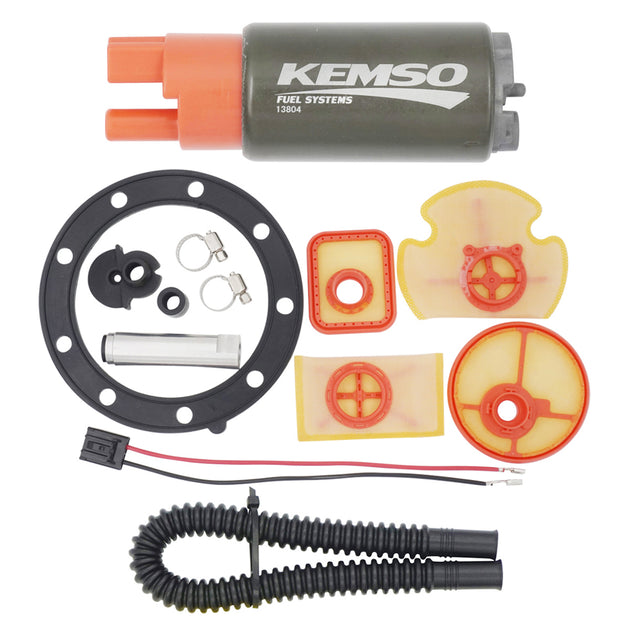 The stability of flow affects the power output curve. The original factory design flow rate is 175 LPH (liters per hour), and it is necessary to maintain a flow rate fluctuation of less than ±2.5% under full-load conditions at 5,500rpm. Third-party test data shows that products that have not passed the SAE J1681 certification have a flow rate attenuation of up to 18% at a low temperature of -30℃, resulting in an extension of the 0-60 MPH acceleration time by 0.8 seconds (the original factory result is 7.4 seconds). The 2023 Canadian Consumer Report indicates that in cold regions, the cold start failure rate of Terrain Denali using General Fuel Pump is as high as 14%, and the average towing rescue cost is 350 Canadian dollars.
Cost and durability need to be comprehensively evaluated. The original Fuel Pump has a designed lifespan of 120,000 miles, an MTBF (Mean Time Between Failures) of 21,000 hours, a failure rate of 1.1%, but is priced at $380- $450. High-quality alternatives such as ACDelco GM12667 have a price range of $190 to $250. The key difference lies in the material process: In the salt spray test, the corrosion weight loss of the original factory parts is 0.15mg/cm² after 500 hours, while the average weight loss of low-cost alternatives is 1.2mg/cm². A random inspection by the Mexican Industrial Authority in 2024 revealed that 35% of products priced under $120 had bearings with insufficient wear resistance. After 300 hours of operation, the noise amplitude exceeded 75dB (the standard limit was 65dB), and the probability of wear debris polluting the fuel system increased to 8%.
The verification of extreme working conditions highlights the engineering gap. Data from the General Motors Milford test track shows that the original Fuel Pump maintains a flow rate of 99% when operating continuously at a high temperature of 45℃, while the decline rate of third-party products reaches 12%. In actual cases, during the 2023 California wildfire season, the failure rate of the Terrain Denali fleet equipped with certified oil pumps was only 0.9%, far lower than the 6.3% of ordinary third-party parts. When diagnosing, it is recommended to use the MDI tool to monitor dynamic parameters: the oil pressure under rapid acceleration conditions should reach 450kPa within 0.4 seconds, and the pressure leakage rate should be less than 10% within 30 minutes after engine shutdown (if it is greater than 20%, it indicates that the check valve has failed). These indicators directly maintain the core value of the eighth-generation ECOTEC engine's thermal efficiency of up to 37%.
The stability of flow affects the power output curve. The original factory design flow rate is 175 LPH (liters per hour), and it is necessary to maintain a flow rate fluctuation of less than ±2.5% under full-load conditions at 5,500rpm. Third-party test data shows that products that have not passed the SAE J1681 certification have a flow rate attenuation of up to 18% at a low temperature of -30℃, resulting in an extension of the 0-60 MPH acceleration time by 0.8 seconds (the original factory result is 7.4 seconds). The 2023 Canadian Consumer Report indicates that in cold regions, the cold start failure rate of Terrain Denali using General Fuel Pump is as high as 14%, and the average towing rescue cost is 350 Canadian dollars.
Cost and durability need to be comprehensively evaluated. The original Fuel Pump has a designed lifespan of 120,000 miles, an MTBF (Mean Time Between Failures) of 21,000 hours, a failure rate of 1.1%, but is priced at $380- $450. High-quality alternatives such as ACDelco GM12667 have a price range of $190 to $250. The key difference lies in the material process: In the salt spray test, the corrosion weight loss of the original factory parts is 0.15mg/cm² after 500 hours, while the average weight loss of low-cost alternatives is 1.2mg/cm². A random inspection by the Mexican Industrial Authority in 2024 revealed that 35% of products priced under $120 had bearings with insufficient wear resistance. After 300 hours of operation, the noise amplitude exceeded 75dB (the standard limit was 65dB), and the probability of wear debris polluting the fuel system increased to 8%.
The verification of extreme working conditions highlights the engineering gap. Data from the General Motors Milford test track shows that the original Fuel Pump maintains a flow rate of 99% when operating continuously at a high temperature of 45℃, while the decline rate of third-party products reaches 12%. In actual cases, during the 2023 California wildfire season, the failure rate of the Terrain Denali fleet equipped with certified oil pumps was only 0.9%, far lower than the 6.3% of ordinary third-party parts. When diagnosing, it is recommended to use the MDI tool to monitor dynamic parameters: the oil pressure under rapid acceleration conditions should reach 450kPa within 0.4 seconds, and the pressure leakage rate should be less than 10% within 30 minutes after engine shutdown (if it is greater than 20%, it indicates that the check valve has failed). These indicators directly maintain the core value of the eighth-generation ECOTEC engine's thermal efficiency of up to 37%.
The stability of flow affects the power output curve. The original factory design flow rate is 175 LPH (liters per hour), and it is necessary to maintain a flow rate fluctuation of less than ±2.5% under full-load conditions at 5,500rpm. Third-party test data shows that products that have not passed the SAE J1681 certification have a flow rate attenuation of up to 18% at a low temperature of -30℃, resulting in an extension of the 0-60 MPH acceleration time by 0.8 seconds (the original factory result is 7.4 seconds). The 2023 Canadian Consumer Report indicates that in cold regions, the cold start failure rate of Terrain Denali using General Fuel Pump is as high as 14%, and the average towing rescue cost is 350 Canadian dollars.
Cost and durability need to be comprehensively evaluated. The original Fuel Pump has a designed lifespan of 120,000 miles, an MTBF (Mean Time Between Failures) of 21,000 hours, a failure rate of 1.1%, but is priced at $380- $450. High-quality alternatives such as ACDelco GM12667 have a price range of $190 to $250. The key difference lies in the material process: In the salt spray test, the corrosion weight loss of the original factory parts is 0.15mg/cm² after 500 hours, while the average weight loss of low-cost alternatives is 1.2mg/cm². A random inspection by the Mexican Industrial Authority in 2024 revealed that 35% of products priced under $120 had bearings with insufficient wear resistance. After 300 hours of operation, the noise amplitude exceeded 75dB (the standard limit was 65dB), and the probability of wear debris polluting the fuel system increased to 8%.
The verification of extreme working conditions highlights the engineering gap. Data from the General Motors Milford test track shows that the original Fuel Pump maintains a flow rate of 99% when operating continuously at a high temperature of 45℃, while the decline rate of third-party products reaches 12%. In actual cases, during the 2023 California wildfire season, the failure rate of the Terrain Denali fleet equipped with certified oil pumps was only 0.9%, far lower than the 6.3% of ordinary third-party parts. When diagnosing, it is recommended to use the MDI tool to monitor dynamic parameters: the oil pressure under rapid acceleration conditions should reach 450kPa within 0.4 seconds, and the pressure leakage rate should be less than 10% within 30 minutes after engine shutdown (if it is greater than 20%, it indicates that the check valve has failed). These indicators directly maintain the core value of the eighth-generation ECOTEC engine's thermal efficiency of up to 37%.